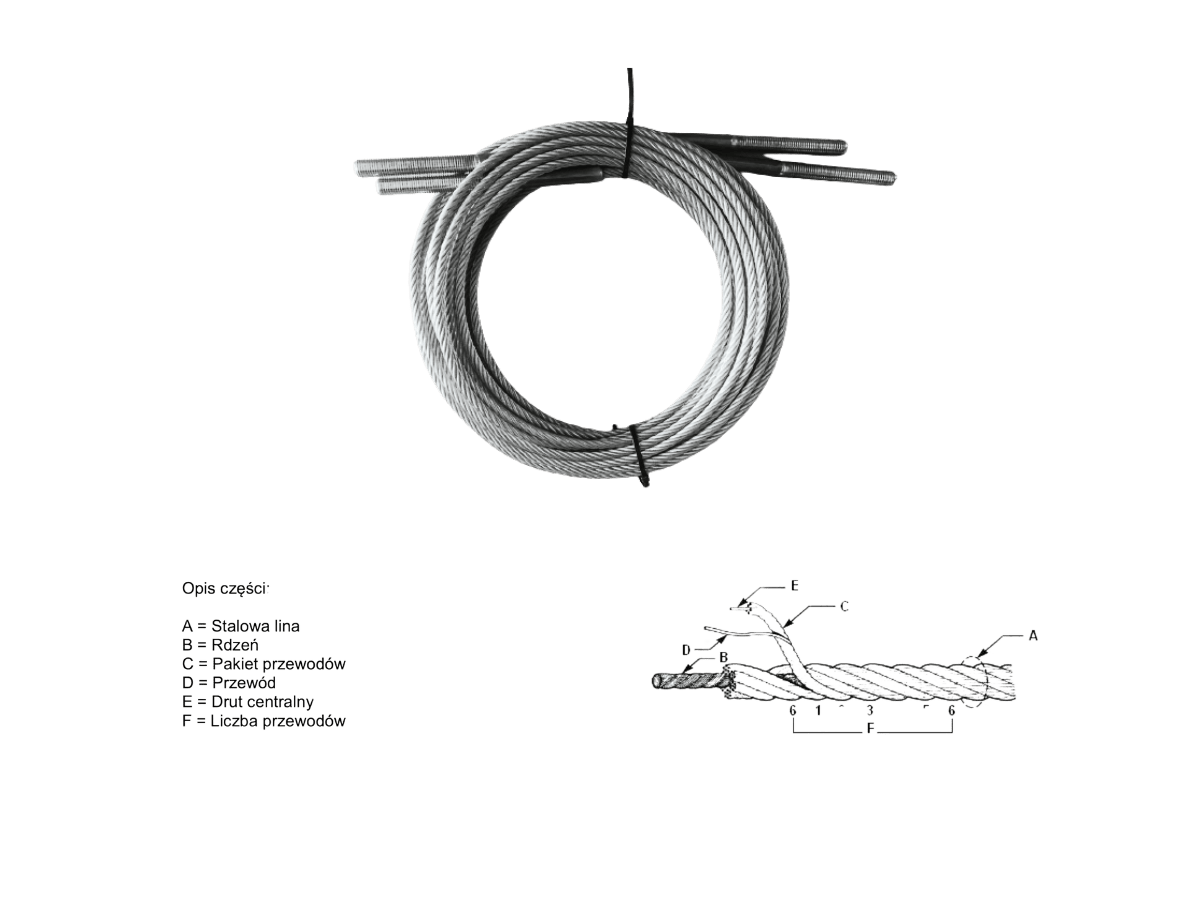

So what is the lifespan of ropes?
The simplest way to express it would be: 'It depends on how a person takes care of the ropes and the conditions in the workshop (e.g., moisture in the lower cover of the ropes), but the average lifespan of a rope is about 5 years.
- added: 06-02-2025
When should the rope be replaced according to a Technical Inspection Authority?
The simplest way to express it would be: "Depending on how a person takes care of the ropes and the conditions in the workshop (e.g., moisture in the lower cover of the ropes), the average lifespan of a rope is about 5 years."
During an inspection, the inspector from the Technical Inspection Authority evaluates the technical condition of the lift, including the condition of the load-bearing ropes. If excessive wear or damage is found, the inspector mandates the replacement of the ropes with new ones. It is ultimately the inspector who decides whether the rope is still fit for use or needs replacing, based on applicable standards and regulations.
What if the lift is not subject to the Technical Inspection Authority?
In this case, the responsibility for assessing the technical condition lies with the owner. It is important to regularly monitor the state of the ropes, paying particular attention to signs of wear and corrosion. Ropes in lifts, especially those connected at the bottom, are exposed to moisture, particularly near the ground. Rust weakens the structure of the rope and can lead to breakage, posing a serious safety risk.
Key indicators that a rope requires replacement:
Whether or not the lift is subject to Technical Inspection Authority control, universal criteria indicate the necessity for replacing synchronization ropes. Replacement is required when any of the following conditions occur:
- Six broken wires in random places along the length of the rope: Breaks in individual wires are an alarm signal and indicate progressing material fatigue.
- Three damaged wires in one strand of the rope: Concentration of damage in one area suggests weakening of the rope's structure in that spot.
- Visible corrosion on the rope’s surface or joints: Rust significantly reduces the rope’s strength, making it prone to breakage..
- Bent, crushed, cracked, or cut core of the rope: Damage to the core is a critical defect that disqualifies the rope from further use.
- Wear exceeding 10% of the rope’s nominal (original) diameter: Abrasion of the rope reduces its cross-section, and accordingly, its strength.".