


Your two-post lift lowers too fast or too slowly? On most lifts you can correct it yourself with one screw on the flow control valve. Here is how to do it safely, step by step.
- added: 03-01-2026

Two-post lift lowering speed adjustment — how to set it
Few mechanics know that you can adjust the lowering speed of a two-post lift yourself. With a 2-ton load, lowering takes about 36 seconds on average, but the value varies by model and manufacturer. If your lift comes down too fast or too slowly, on most designs you can correct it with a single screw. In this post we show how to adjust the lowering speed safely, step by step.
Contents
What the lowering speed depends on
A two-post lift lowers by gravity: the weight of the vehicle pushes the oil out of the cylinders back into the tank, and the rate of this flow sets the lowering speed. The system has a flow control (throttle) valve that restricts this flow. This is the valve you use to adjust how fast the arms come down. From the factory, lowering with a 2-ton load takes about 36 seconds on average, but the exact value depends on the model and manufacturer.
Lowering speed is not a matter of taste: lowering too fast is dangerous for people and the vehicle, and lowering too slowly drags out every job. Adjusting it lets you find a sensible compromise for your workshop.
Adjusting the lowering speed step by step
The adjustment is made on the flow control valve, which is secured with a lock nut. The whole procedure comes down to three steps:
- Loosen the lock nut — this releases the valve’s adjusting screw.
- Turn the Allen key — clockwise to decrease, anticlockwise to increase the lowering speed. Adjust in small steps and check the result.
- Once the speed is right, tighten the lock nut — it locks the setting so it cannot drift by itself.
Step 1 — loosen the lock nut
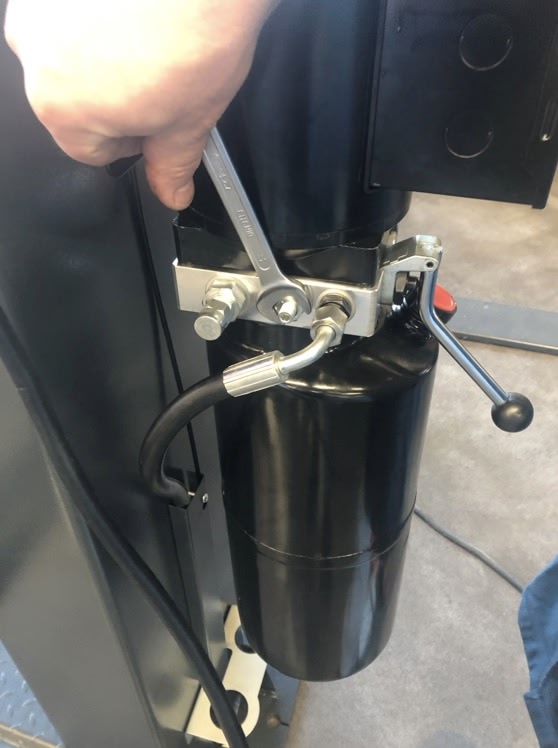
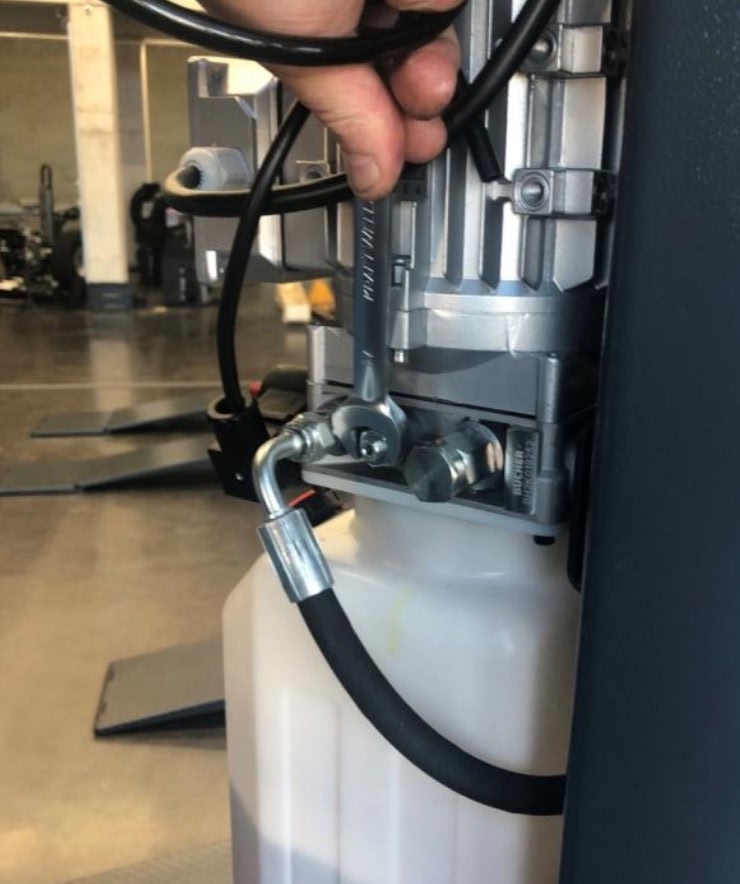
Loosen the lock nut that holds the valve’s adjusting screw.
Step 2 — adjust with an Allen key
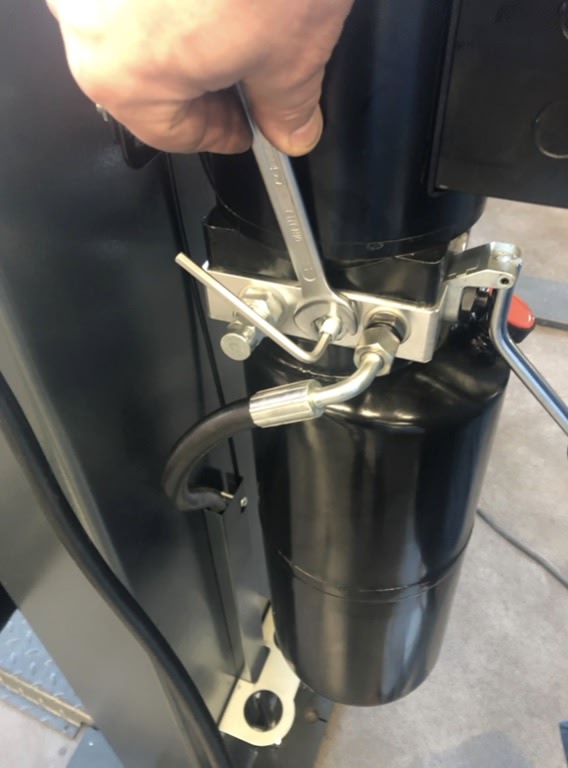
Turning the Allen key clockwise decreases the lowering speed, anticlockwise increases it. Finally, tighten the lock nut.
💡 Always adjust with the lift unloaded, and check the speed with your typical load — the result can differ between an empty and a loaded lift.
What to keep in mind when adjusting
Change the setting gradually — a full turn of the screw can change the lowering rate a lot. If the lift still lowers very slowly even with the valve opened up, the cause may lie elsewhere: dirty oil, air in the system or worn cylinder seals. Adjusting the valve will not fix that. If the lift does not move down at all when you press the button, adjusting the throttle will not help either: check whether the lowering valve opens and whether its solenoid coil works. We describe how to check this under solenoid coils, and you will find replacement parts in our car lift valves category. Also keep in mind that not every lift has an adjusting valve accessible from the outside — check the manual for your model.
From our workshop experience
The most common misunderstanding customers come to us with is: “the lift lowers too slowly, the pump or cylinder must need replacing”. In practice, in most of these cases it was enough to open the throttle valve slightly — the speed went back to normal without any repair. The flip side: someone opens the valve “half a turn by eye” and suddenly the lift drops in a few seconds. That is why we adjust in small steps and always tighten the lock nut afterwards — without it, vibration during operation can make the valve drift over time.
Need parts for your lift’s hydraulic system — valves, seals, oil or nuts? See our car lift parts
Frequently asked questions (FAQ)
How long should a two-post lift take to lower?
With a 2-ton load, lowering takes about 36 seconds on average. The exact value depends on the lift model and manufacturer, so treat these 36 seconds as a rough reference, not a fixed standard.
How do I increase or decrease the lift lowering speed?
Loosen the lock nut on the flow control valve and turn the Allen key: clockwise to decrease, anticlockwise to increase the lowering speed. Once the speed is right, tighten the lock nut. Adjust in small steps.
The lift lowers very slowly despite adjustment — what could be the cause?
If opening the flow control valve does not help, the cause is often dirty oil, air in the hydraulic system or worn cylinder seals. Adjusting the valve will not fix that — the hydraulic system then needs servicing.