




Leave feedback on the product


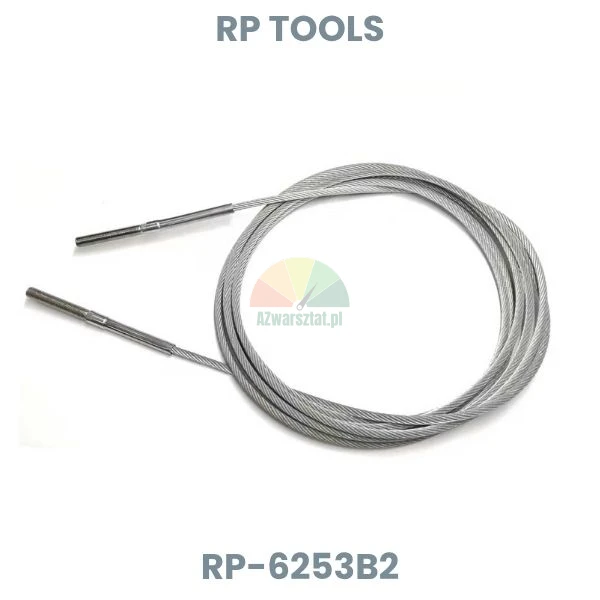
RP-Tools replacement: Steel cable for the RP6253B2 hoist (August 2013)

Shipping costs are not included in the price.
Shipping costs are not included in the price.
Product code: rptools-0003
Share the product card


Ask about the product
The personal data controller is Graf-Art Sławomir Kulbida. We process it to respond to the inquiry. More information about the processing of personal data can be found in the privacy policy.

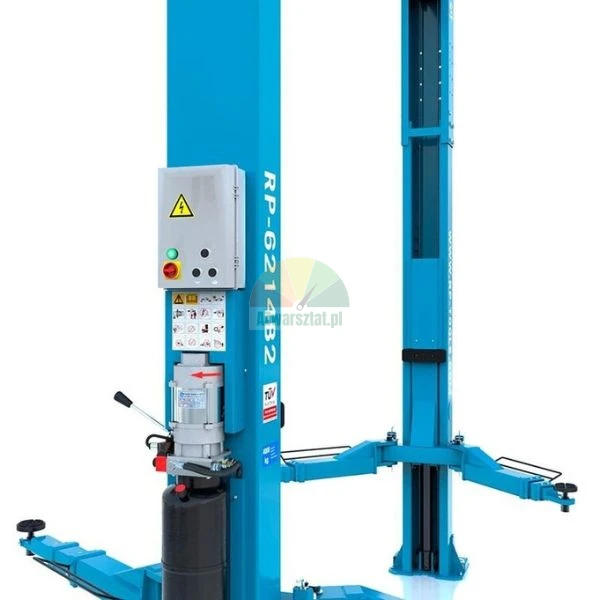
Steel cable for the RP-Tools RP6253B2 car lift (> August 2013) – replacement
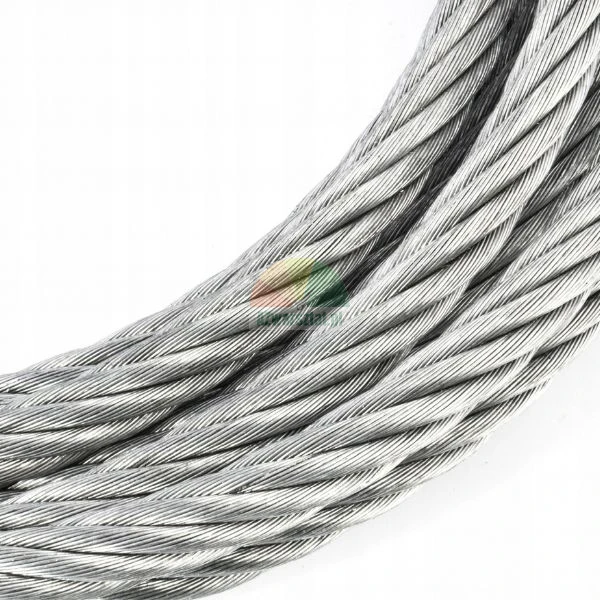
Steel cable for RP-Tools RP6253B2 two-post lifts manufactured after August 2013, with posts 2826 mm high. The cable runs in the lift mechanism that transmits motion and synchronises the operation of both posts.
This product replaces the original RP-Tools cable with part number RP-RP-ZET-XSZ-7-9A-RP. Before ordering, check the lift model designation and the post height. The name "RP6253B2" alone, without the version and dimensions, may not be sufficient to select the correct cable.
Technical specifications
| Part type | Replacement steel cable for a vehicle lift |
| Lift manufacturer | RP-Tools |
| Model | RP6253B2, version > August 2013 |
| Height of lift posts | 2826 mm |
| Replacement part number | RP-RP-ZET-XSZ-7-9A-RP |
| Material | Steel |
| Contents | 1 steel cable |
The price is for one cable. The lift uses two cables. To keep the mechanism running smoothly, we recommend replacing both cables at the same time. If a complete set is needed, order 2 items.
EU Declaration of Conformity and use in the lift
The cable is supplied with an EU Declaration of Conformity covering Machinery Directive 2006/42/EC and the technical requirements of EN ISO 12100.
The document can be presented when recording the replacement of a lift component and during regular inspection of the lifting equipment by a competent person, in accordance with applicable regulations and EN ISO 9927-1. However, the outcome of the inspection depends on the condition of the entire machine, correct assembly, system adjustment and the completeness of the lift's documentation. The cable documentation alone does not replace the acceptance or inspection of the machine.
What to look out for when replacing
- Do not replace just one cable when the other has been in service for the same period. Differences in elongation and stiffness between the cables may cause uneven movement of the lifting carriages on the two posts.
- Before installation, compare the routing of the new cable with that of the old one, particularly at the pulleys, attachment points and threaded cable ends.
- After installation, check the cable tension and the synchronisation of the posts. A cable that is too loose may cause a delayed response on one side of the lift, while one that is too tight increases the load on the pulleys, bearings and attachment points.
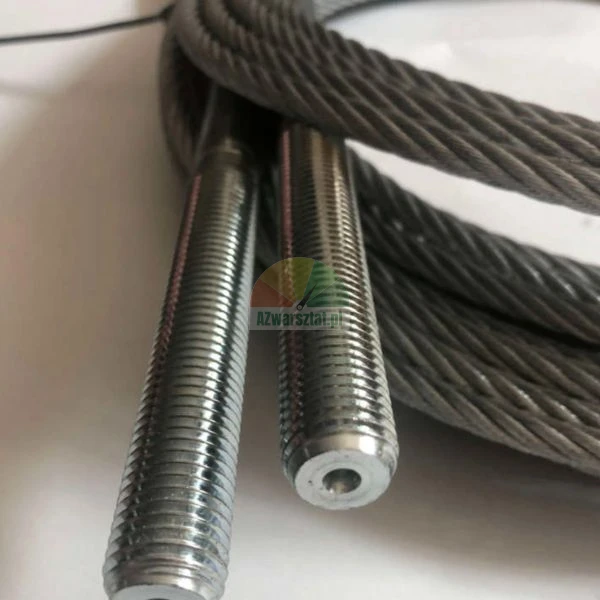
- The cable ends must be aligned axially. Twisting the cable during installation causes localised overloading and accelerates wear of the individual wires at the swaged fittings.
- During inspections, do not limit the check to the visible part of the cable inside the post. Damage often appears earlier at the pulleys, on sections running at a constant bending radius, and immediately next to the cable end fittings.
A broken wire is not the only early sign of wear. Other warning signs include: a change in cable diameter along the working section, flattening of the strand, localised delamination, corrosion between the wires, jamming during lifting or lowering, and a height difference between the lifting carriages after the lift has stopped.
Consequences of operating with worn cables
A worn or unevenly tensioned cable can cause the lifting carriage to become misaligned, result in erratic operation of the safety locks, and place increased strain on the guide pulleys. This may in turn lead to accelerated wear of the pulley grooves, bearings and cable attachment points. When replacing the cable, therefore, also assess the condition of the guide components and check whether the cable has been running over a pulley with a damaged or seized bearing.
Suitable for: RP-Tools RP6253B2 (> August 2013), lifts with posts 2826 mm high.
Opinions
If you've added a review and it doesn't appear on the list, it may be pending moderation.
Leave feedback on the product
Do you need help?

Go to the blog.
Talk to our customer service team.
Monday to Friday from 9:00 AM to 3:00 PM.
Frequently Asked Questions
What cables do I need for my two-post lift?
Check the rope termination. If there are any markings on it, the total rope length is very often indicated as well, e.g., L8920. This means the rope length is 8.92 m.
Additionally, to correctly select the rope, you need to provide the following technical parameters:
- Rope diameter – measured in the middle section (e.g., 8 mm, 9 mm or 10 mm)
- Thread – diameter (e.g., M16)
- Thread – length – length of the threaded section (e.g., 14 cm)
The drawing below shows the parameters that must be provided when ordering the rope:
What is my machine's model?
- Find the nameplate on the device – it usually contains key information, such as:
- Manufacturer
- Device model
- Year of manufacture
- Serial number
- If you cannot find the nameplate and do not have the technical documentation, selecting parts based on the model may be difficult. In this situation, we recommend searching for parts by category, photos, and dimensions, which often allows you to precisely match the correct component.
Can I return or exchange the part if it doesn't fit?
If the ordered part doesn’t fit, you can return or exchange it within 30 days of the purchase date.
For the return to be accepted, the part must:
- be unused and undamaged,
- show no signs of installation,
- be sent back in its original or appropriately secured packaging.
We care about your shopping experience, so the return process is quick and hassle-free. If you have any doubts, contact us – we’ll be happy to help you choose the right part or guide you through the return process.

