




Leave feedback on the product


Plastic mounting bracket

Shipping costs are not included in the price.
Shipping costs are not included in the price.
Product code: M-STOP-0006
Share the product card


Ask about the product
The personal data controller is Graf-Art Sławomir Kulbida. We process it to respond to the inquiry. More information about the processing of personal data can be found in the privacy policy.

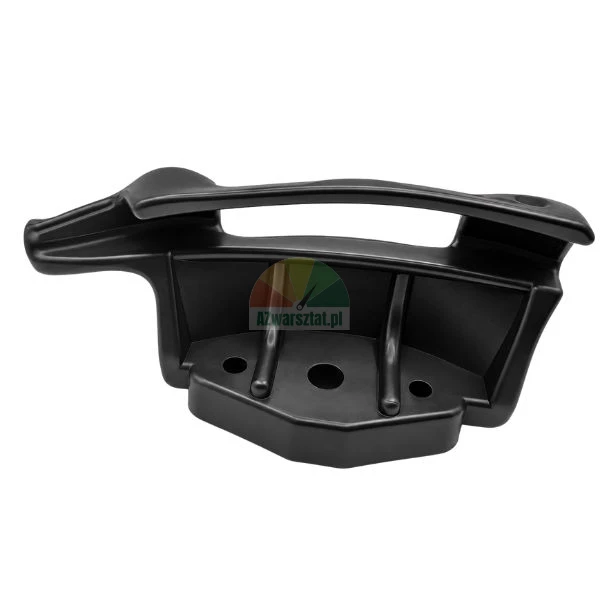
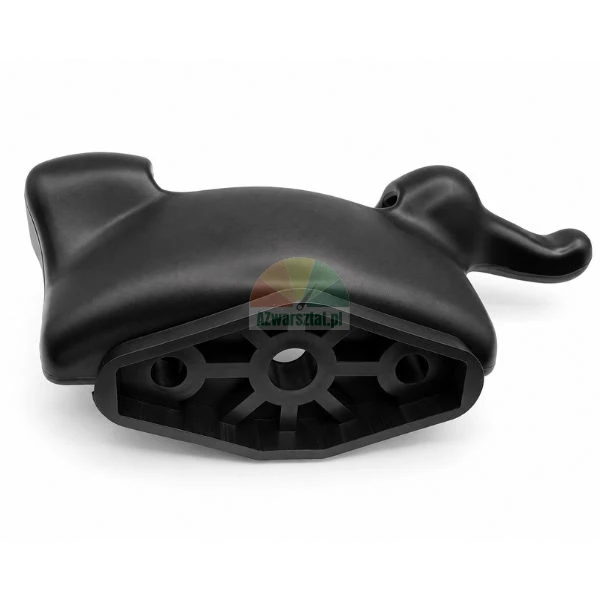
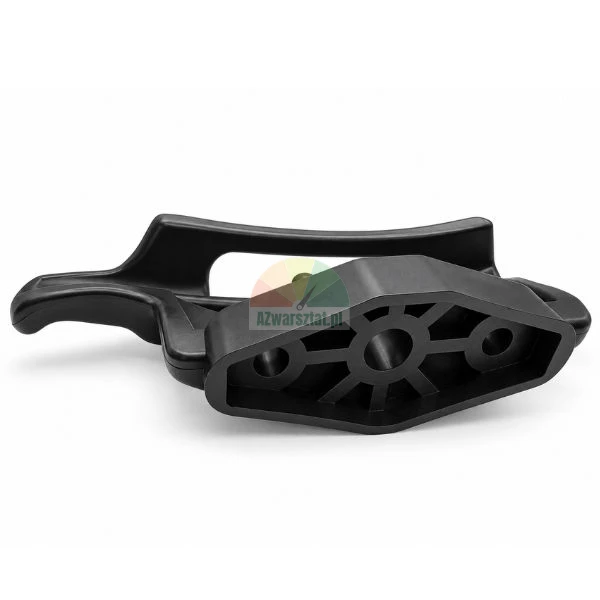
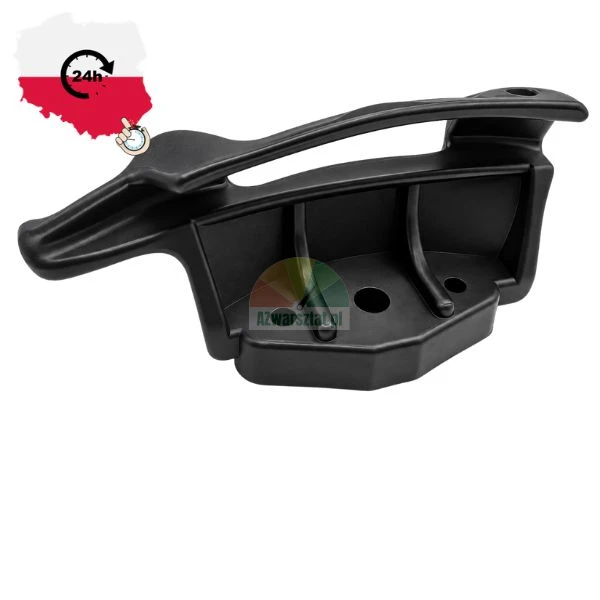
Plastic mounting foot for a tyre changer
A mounting foot made of black plastic, designed for use in the mounting head of a tyre changer. The component guides the foot along the rim edge whilst fitting or removing a tyre, limiting direct contact between the metal parts of the head and the rim.
The plastic working surface is particularly useful when handling aluminium, painted and polished rims. Tyre changer manufacturers, including Ravaglioli, point out that a plastic head can operate closer to the rim than a steel one, which helps to reduce stress on the tyre bead when fitting low-profile tyres. Sice also uses plastic heads to minimise the risk of scratching the rim.
Technical data
| Type | Mounting bead / mounting head component |
| Material | Plastic |
| Colour | Black |
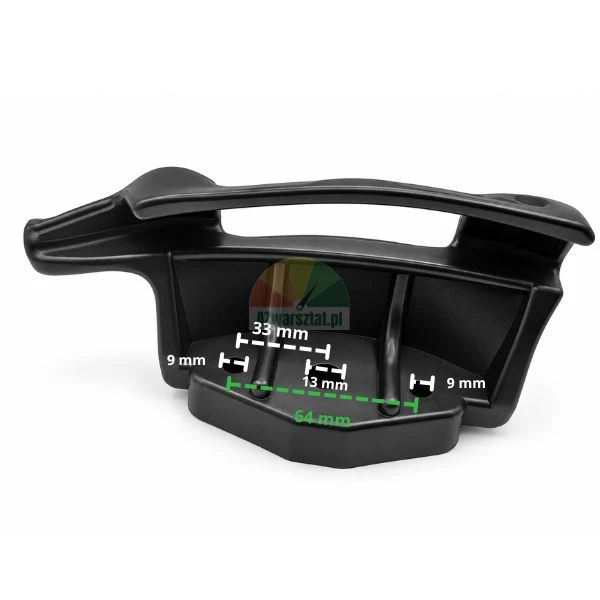
| Mounting holes | 3 holes, diameter approx. 9 mm |
| Spacing as shown in the dimensional drawing | approximately 64 mm between the outer axes of the holes |
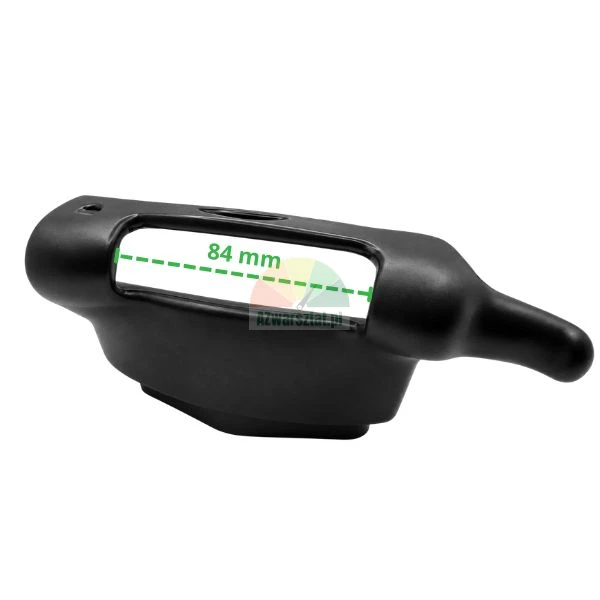
| Hole at the top | length approx. 84 mm |
Before ordering, compare the hole pattern and the shape of the foot with the component fitted to the machine. The hole spacing alone is not sufficient if the geometry of the working part or the method of guidance in the head differs.
Wear and signs of problems during operation
The leading edge of the foot, which slides along the rim and the tyre bead, is subject to the greatest stress. Wear does not always begin with a visible crack. An early sign may be increased resistance when rotating the table, the need to press the tyre down harder, or the appearance of friction marks on the painted surface of the rim.
If the working surface becomes worn, rounded or deformed, the position of the bead relative to the rim changes. This can cause the tyre bead to slip off the rim edge, result in localised stress on the tyre bead, and lead to increased stress when fitting low-profile and run-flat tyres.
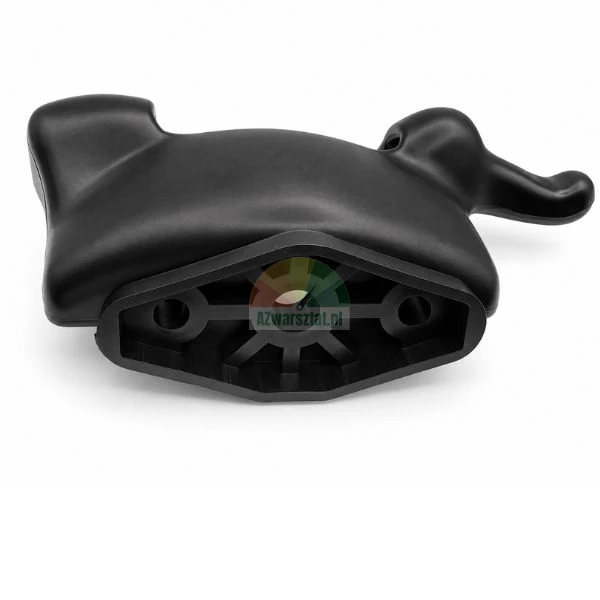
It is worth paying attention to the areas around the mounting holes. Any play or warping of the plastic around the bolts causes micro-movements of the tyre bead seat whilst the table is rotating. In practice, this impairs the repeatability of the head’s positioning, accelerates wear on the working surface and increases the risk of metal parts coming into contact with the rim.
Fitting and operation
- Before installation, compare the number of holes, their diameter, spacing and shape with those of the removed part.
- The bolts should clamp the foot evenly; uneven tightening may stress the plastic and cause cracking around the holes.
- After fitting, check that the footplate is not misaligned with the head’s guide components and that it does not interfere with the rim when the table is turned by hand.
- Do not use a metal tool to apply additional force to the bead. Excessive prying may break the reinforcing ribs or widen the mounting holes.
- When working with tyres with a rigid bead, check that the tyre bead is seated in the rim’s mounting recess. If not, the load transferred to the head and the bead increases sharply.
The Ravaglioli and Sice tyre changer manuals describe the plastic components of the head as a means of minimising metal-to-rim contact. However, this does not mean that the bead itself replaces the correct positioning of the head, the pressure of the tyre bead in the rim groove, and the use of a suitable mounting lubricant.
Compatibility: before purchasing, you must confirm that the tyre bead seat is compatible with the specific head and mounting system used on your tyre changer. The available data does not specify a particular machine model.
Product safety
Responsible person in the EU
Graf-Art Sławomir Kulbida
ul. Bolesława Chrobrego 38/5
59-700 Bolesławiec, Poland
Importer
Graf-Art Sławomir Kulbida
ul. Bolesława Chrobrego 38/5
59-700 Bolesławiec, Poland
Opinions
If you've added a review and it doesn't appear on the list, it may be pending moderation.
Leave feedback on the product
It pairs well


Do you need help?

Go to the blog.
Talk to our customer service team.
Monday to Friday from 9:00 AM to 3:00 PM.
Frequently Asked Questions
What cables do I need for my two-post lift?
Check the rope termination. If there are any markings on it, the total rope length is very often indicated as well, e.g., L8920. This means the rope length is 8.92 m.
Additionally, to correctly select the rope, you need to provide the following technical parameters:
- Rope diameter – measured in the middle section (e.g., 8 mm, 9 mm or 10 mm)
- Thread – diameter (e.g., M16)
- Thread – length – length of the threaded section (e.g., 14 cm)
The drawing below shows the parameters that must be provided when ordering the rope:
What is my machine's model?
- Find the nameplate on the device – it usually contains key information, such as:
- Manufacturer
- Device model
- Year of manufacture
- Serial number
- If you cannot find the nameplate and do not have the technical documentation, selecting parts based on the model may be difficult. In this situation, we recommend searching for parts by category, photos, and dimensions, which often allows you to precisely match the correct component.
Can I return or exchange the part if it doesn't fit?
If the ordered part doesn’t fit, you can return or exchange it within 30 days of the purchase date.
For the return to be accepted, the part must:
- be unused and undamaged,
- show no signs of installation,
- be sent back in its original or appropriately secured packaging.
We care about your shopping experience, so the return process is quick and hassle-free. If you have any doubts, contact us – we’ll be happy to help you choose the right part or guide you through the return process.

