




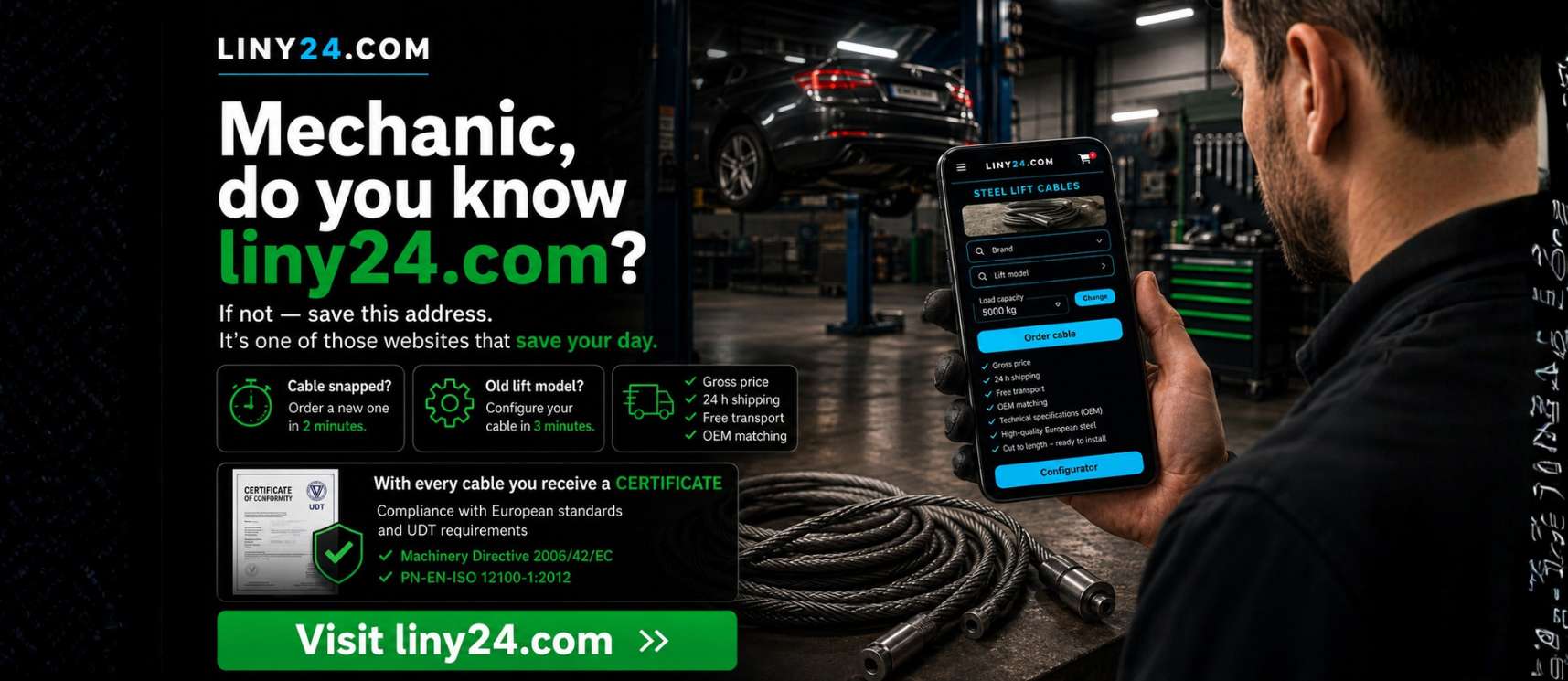
Snapped cable on your car lift? Here's how to order a new one in minutes...
Every mechanic knows the sight: a two-post lift with a car up top drops onto its safety latches because a cable on the car lift has snapped. The vehicle is stuck, the bay is dead, and you're losing time and money. The second, equally common case: the cable is due for preventive replacement, but the manufacturer disappeared years ago and the model is two decades old. In both situations one thing matters most — getting the right cable as fast as possible. Here's how to do it without hours of calling around suppliers.
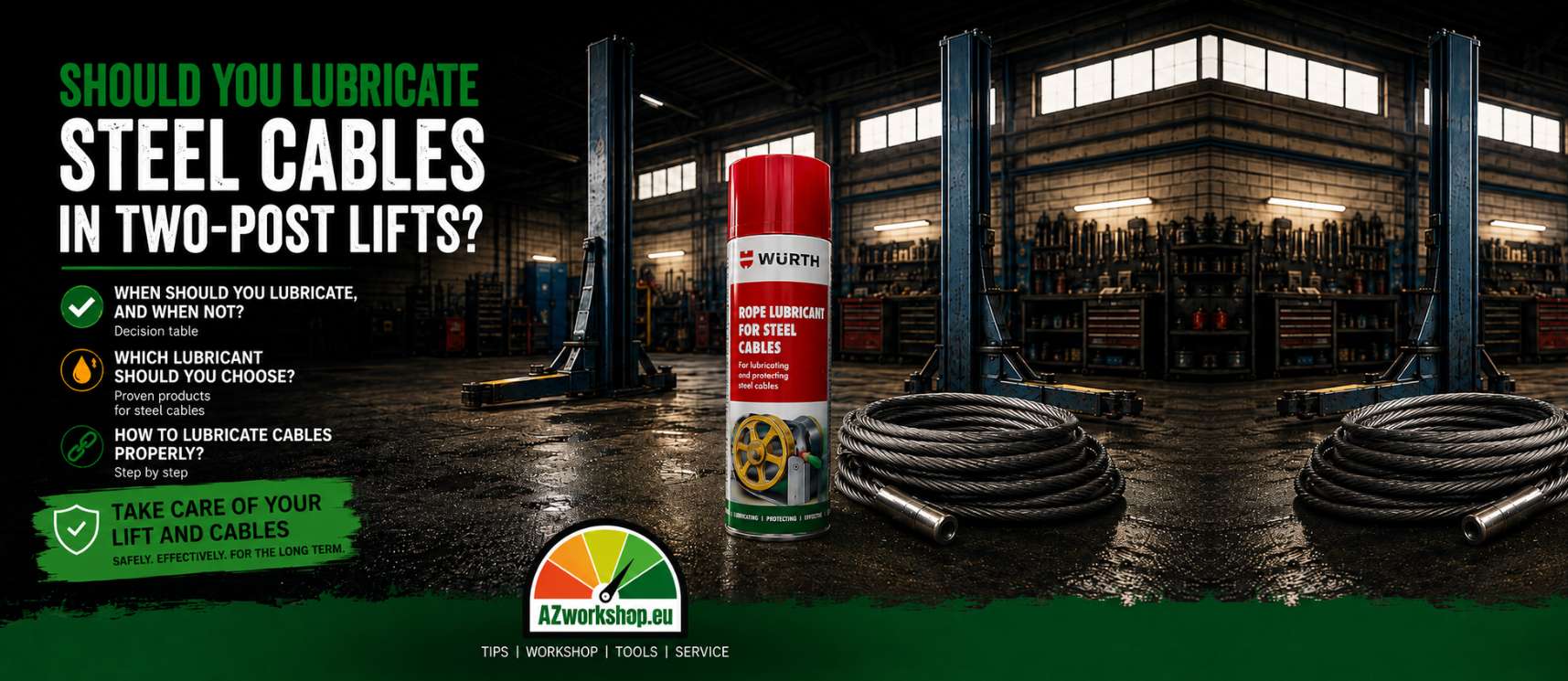
Should steel cables in two-post lifts be lubricated?
In most cases you don't need to lubricate the steel cables in a two-post lift. If the cables work in dry conditions, with no standing water under the channel, they last up to 15 years with no maintenance at all. Lubrication only makes sense when the lift is connected at the bottom and the cables are in constant contact with moisture — and in that case you use a penetrating wire-rope lubricant, not ordinary machine grease.
 Log in with Facebook
 Log in with Google